 LocalPersonas
Franchise Local Marketing Ideas That Stay On-Brand
Concrete local marketing plays a franchise location can run inside brand rules, organized by effort, with honest notes on what usually works and what wastes budget.
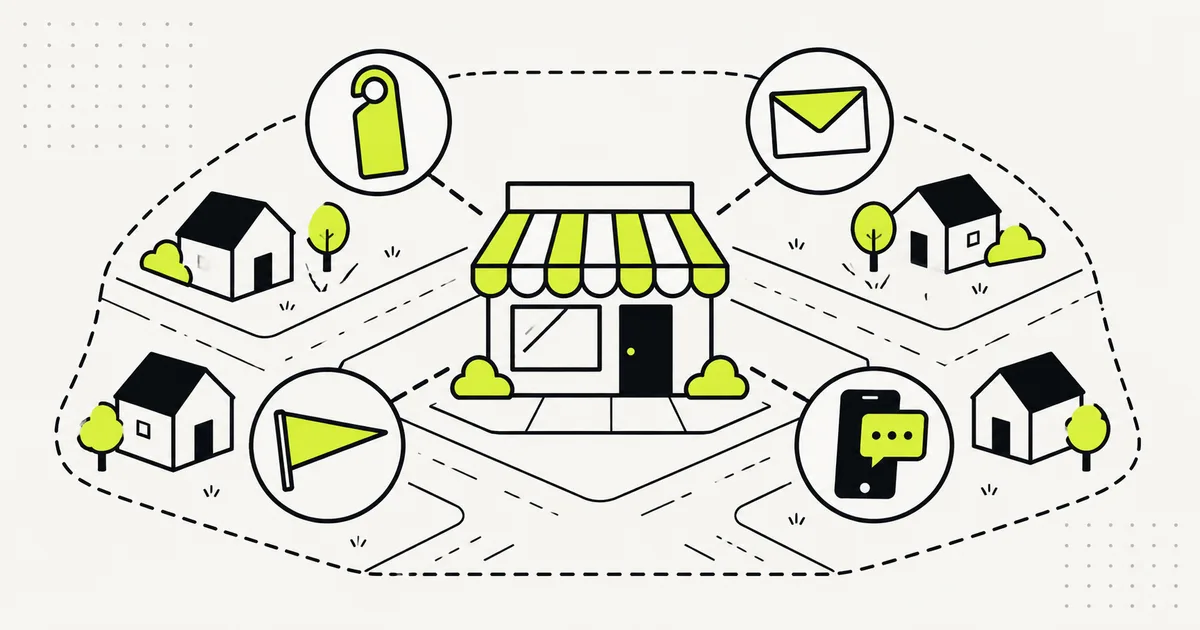
Ask a franchise owner what local marketing means and most describe the same short list: a Facebook boost, a mailer, maybe a sponsorship. The list is short not because local marketing lacks options, it is short because the brand rules and the owner's actual time leave a narrow lane to work in. What follows is that lane, organized by how much effort each play takes, with honest notes on where each one tends to fail.
What "on-brand" actually restricts
Most franchise brand standards limit three things: visual identity, claims, and tone. They rarely restrict which channel a location uses or which neighborhood tactic it runs. That gap is where local marketing lives. A location can sponsor a youth soccer team, run a same-street door hanger, or text lapsed customers, all without touching a single thing the brand standard governs, as long as the logo, the claims, and the voice stay inside the lines.
The practical filter before running anything local: does this use the approved logo file, does it avoid a claim the brand cannot substantiate, and does it sound like the brand's voice rather than the owner's personal voice. Clear that filter and channel choice is wide open. Franchise brand consistency covers what the standard should specify so this filter is answerable in seconds rather than a judgment call.
Low-effort plays, high frequency
These take an afternoon or less and are worth running on a rolling basis rather than once.
Google Business Profile posts. A weekly post with a seasonal offer or a real photo of the crew or storefront keeps the profile active, which correlates with better local pack visibility. It commonly fails when the posts are generic stock copy, because the profile's value is proof of an active, real local business.
Review requests at the point of service. A text sent within an hour of a completed job converts to reviews at a far higher rate than an email sent the next week, simply because the experience is still fresh. It commonly fails when the request goes out days later as a batch, by which point the customer has moved on.
Neighbor-specific proof. "We just finished a job on your street" is a real local marketing asset if the location tracks it. A door hanger or a social post naming the actual street or landmark converts better than "in your area," because the claim is checkable by looking outside. It fails the moment the specificity is faked or stale.
Local hashtags and geo-tags on existing social posts. This costs nothing beyond attention to detail and widens organic reach into people actually searching the neighborhood.
Medium-effort plays, monthly cadence
Sponsorship of a local team, event, or school fundraiser. This buys goodwill and a logo placement more than it buys leads, and it should be budgeted with that expectation. It commonly fails when a location treats a $500 sponsorship as a lead-generation line item and gets disappointed by the math.
A win-back text or email to lapsed customers. Short, specific, no exclamation points, with an easy opt-out. This is one of the highest-return plays available to an existing location because the list already trusts the brand. It fails as a cold acquisition tool, where the same message from an unfamiliar sender reads as spam rather than a relationship.
A landing page built for the location, not the national site. Someone searching the brand name plus their city is asking whether this location serves them, and a page with local address, service area, and local reviews answers that question better than the corporate homepage does. Building one is a few hours of work if the brand template supports it.
Local service reminder campaigns. A message that tracks a specific piece of equipment or service interval ("your filter is due") outperforms promotional messages for retention, because it demonstrates the business is tracking the customer rather than its own revenue.
Higher-effort plays, seasonal or occasional
A direct mail drop timed to a real trigger. Storm damage, a seasonal service window, a new-mover list. Mail earns its cost when the timing is specific. The failure mode is running the same mail piece on a fixed calendar regardless of whether the trigger is actually present in that market that month.
A local landing page plus paid search for brand-plus-city terms. This is where local marketing and search advertising overlap, and it is worth treating as one project rather than two. If corporate already owns the bare brand term, the location's opportunity is the geography-qualified searches corporate is not built to answer well. Check with corporate before bidding on anything with the brand name in it, so a location's spend does not end up competing with its own corporate campaign in the same auction.
Partnering with adjacent local businesses for cross-promotion. A home services location partnering with a real estate office, or a fitness location with a physical therapy practice, extends reach into an audience that already trusts a similar business. It is slow to set up and slow to pay off, which is why it belongs in the occasional category rather than the monthly one.
The plays that usually waste budget
A few patterns recur across franchise systems as reliable underperformers, worth naming plainly rather than discovering the expensive way.
Boosting a post with no offer or hook. A boosted post that is really just brand awareness content rarely converts at the local level, where the audience is small enough that frequency matters more than reach.
Broad radius targeting with no message tailored to it. Running the exact national ad copy inside a five-mile radius does not make it local marketing, it makes it national marketing with a smaller audience and a worse cost per result.
Discount-led acquisition as the default offer. A steep discount attracts the least loyal segment of the local market and sets a price anchor that is hard to move later. It also does little for the trust objection that is usually the real barrier for a location customers have not used before.
Validate before you spend, not after
The plays above vary a lot by market. A sponsorship that lands well in one town reads as out of touch in the next, and a win-back offer that works on a price-sensitive list falls flat on a loyal one. The honest fix is not more general advice, it is checking the specific copy against the specific local audience before the budget goes out.
Running planned local ad copy against personas built from the actual trade area, before it spends, surfaces which claims land and which get ignored. Pre-launch ad testing is built for exactly this: catching a mismatch between what the location assumes will land and what a specific neighborhood actually responds to, while it is still a five-minute revision instead of a wasted mailer.
Building a monthly local plan
A workable structure most locations can sustain without a marketing hire:
- Run the low-effort, high-frequency plays continuously: review requests, profile posts, neighbor-specific proof.
- Pick one medium-effort play per month and give it the full month rather than splitting attention across three.
- Reserve the higher-effort plays for a real seasonal trigger, not a fixed calendar slot.
- Test any new copy or offer against the local audience before it goes out, especially anything with a discount attached.
- Track which plays a given location has actually tried, since the honest failure mode is not running out of ideas, it is repeating the same three every quarter.
None of this requires abandoning the brand standard. It requires using the room the standard actually leaves, which is almost always wider than the average franchisee assumes.
You can test a piece of local ad copy free against a market panel before you spend on it. Related reading: how to launch the first ad campaign for a new franchise location and franchise brand consistency in ad creative.