 LocalPersonas
Franchise Brand Consistency: Keeping Ad Creative On-Brand in Every Market
Franchise brand consistency breaks when operators fill gaps the standard leaves open. How to systematize visual consistency and catch tonal drift before ads run.
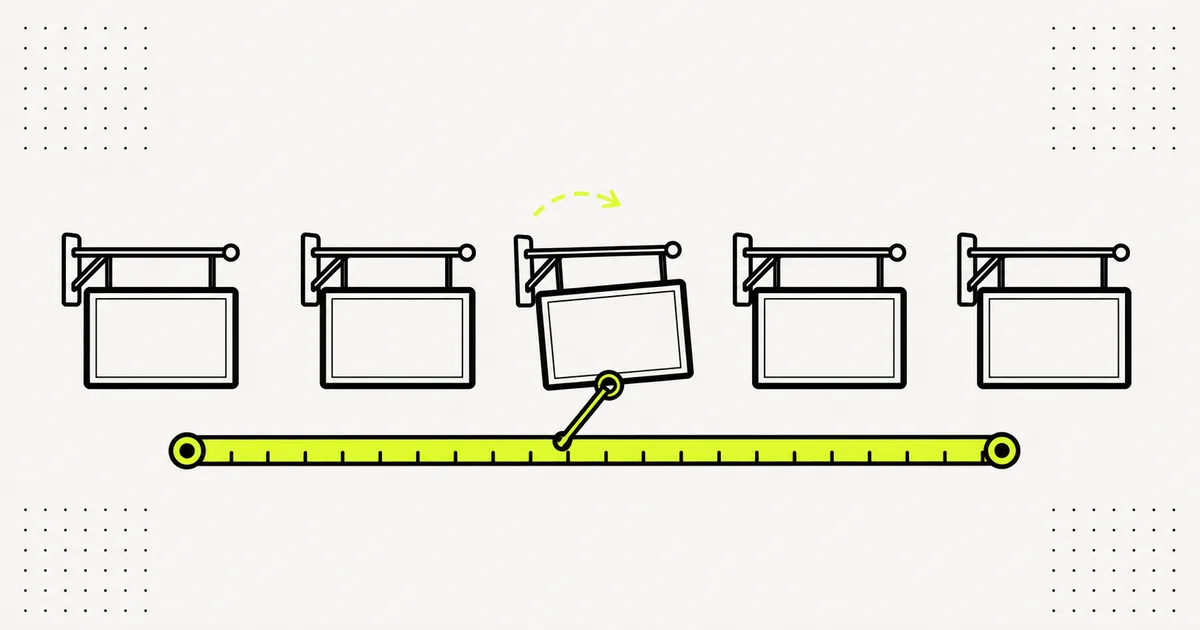
Franchise brand consistency breaks for an unglamorous reason. The brand standard did not answer a question the local operator had, so the operator answered it alone, at 6pm, with a campaign going live the next morning. Consistency is won by closing those gaps before the ad runs, not by policing after it does.
Where the drift actually starts
Most off-brand franchise ads are not acts of rebellion. They are gap-filling. A brand book specifies the logo, the colors, and the tagline, then goes quiet on the decisions a local operator faces weekly: how to phrase a seasonal discount, whether to name a competitor, how aggressive the call to action may be, whether financing can lead the headline.
When the standard is silent, the operator uses judgment. Twenty operators using independent judgment produce twenty different brand voices. The output reads as indiscipline, but the cause is an incomplete specification.
That reframing matters, because the two diagnoses have opposite treatments. Rebellion calls for enforcement. Gap-filling calls for better documentation and a faster review path. Most franchise systems reach for enforcement first, then wonder why compliance stays flat.
The three kinds of off-brand ad
Sorting incoming creative into three buckets makes the right response obvious.
| Kind | What it looks like | Real risk | Usually caught by |
|---|---|---|---|
| Visual | Wrong logo lockup, unapproved colors, stretched type | Low | A checklist |
| Tonal | Every word permitted, voice wrong: a premium brand running discount-led urgency copy | High, and slow to surface | Almost nothing |
| Factual or legal | Claims the brand cannot substantiate, pricing that contradicts a national campaign | High and immediate | Legal review, when it happens |
Most franchise review processes are built almost entirely to catch the first row, because visual errors are the ones a checklist can express cleanly. The second row is where brand equity quietly erodes, and it needs a different kind of check than a checklist can provide.
Visual consistency is the solvable layer
Franchise visual consistency, meaning the same logo lockups, colors, typography, and layout rules in every market's ads, is the layer most systems have already half-solved, because it is the only layer a checklist can fully express. If local ads still drift visually, the fix is mechanical rather than cultural:
- Ship locked templates for the formats operators actually run: Facebook and Instagram placements, Google responsive ads, direct mail, and door hangers, each sized correctly so nothing gets stretched.
- Keep assets in one shared library with the outdated versions removed. Operators use the file that is easiest to find, so make the current lockup the only one available.
- Write the visual rules as pass-or-fail checks a non-designer can apply in seconds: this logo file, these color values, this minimum clear space, no type substitutions.
Visual consistency is worth systematizing precisely because it can be delegated entirely to templates and checks. It is also the smallest part of the problem. An ad can be pixel-perfect on the visual standard and still sound like a different company, which is why the harder work sits in the tonal layer.
What a brand standard has to specify
A brand standard that prevents drift answers the questions operators actually ask. At minimum it should be explicit about:
- Claim ceilings: the strongest promise any location may make without corporate sign-off, written as example sentences rather than adjectives.
- Discount language: which words are approved for promotions, and whether percentage-off, dollar-off, or bundled framing is preferred.
- Competitive positioning: whether competitors may be named, implied, or referenced only by category.
- Urgency: whether deadlines, countdowns, and scarcity framing are permitted, and in which contexts.
- Proof: which credentials, ratings, guarantees, and affiliations may appear, and the exact wording for each.
The test of a good standard is not length. It is whether a franchisee can write a Facebook ad on a Friday afternoon without needing to ask anyone a question. If they still have to guess, the standard has a gap, and that gap will be filled locally.
Reviewing creative before it runs
The structural problem with franchise creative review is timing. Corporate typically sees an ad in one of two states: as a proposal weeks before launch, when the operator has not yet written the real copy, or as a report weeks after launch, when the money is already spent.
The useful review window is narrow and late: after the copy exists, before the budget commits. That window is usually measured in hours, which is why heavyweight approval processes fail. A queue with a three-day turnaround will simply be routed around by an operator with a weekend promotion to run.
Any review step living in this window has to be fast enough that using it is easier than skipping it. That constraint rules out most committee-based approvals, and rules in anything an operator can run themselves in minutes.
Where persona testing fits
Simulating audience reaction is a way to make the tonal check, the hardest of the three buckets, fast and repeatable. Instead of asking whether copy feels on-brand, which invites opinion, you ask how the intended local audience responds to it, which produces specific objections you can act on.
Run the same ad against personas built for the market it will run in, which is what the Persona Simulation Lab does. You get a likelihood-to-act score and verbatim reactions naming what landed and what did not. When a premium brand runs discount-heavy copy, the feedback usually shows it directly: personas respond to the price and stop mentioning the quality signals the brand spent years building.
This turns an argument about taste into a review of evidence. That is a meaningful difference when the person receiving the feedback is an independent operator who does not report to you.
A workflow operators will actually use
A review process survives contact with real franchisees when it is short, self-serve, and mostly automatic.
- Publish the standard as answerable rules with example sentences, not as adjectives.
- Give operators a self-serve check they can run on their own copy in minutes, before submitting anything.
- Route only the exceptions to a human: new claim types, legal-sensitive categories, and campaigns above a spend threshold.
- Keep a record of what ran in each market, so patterns surface across the system rather than one location at a time.
- Feed recurring failures back into the standard. A question three operators asked is a gap, not three mistakes.
Step five is the one most systems skip, and it is the compounding one. Every gap you close permanently removes a category of future drift.
What to measure
Compliance rate is a tempting metric and a weak one, because it mostly measures how many ads passed through the process rather than how good the creative was. More useful signals:
- Share of campaigns revised before launch rather than after. Revision before spend is the process working.
- Number of standard gaps closed per quarter, sourced from operator questions.
- Variance in messaging approach across markets running the same promotion, which tells you whether the standard is genuinely shared.
Brand consistency across a franchise system is not a policing problem. It is a specification problem with a review step attached, and the review step only works if it is fast enough to beat the deadline the operator is already working against.
If you want to see what that review step returns on a real ad, you can test one free without an account. Related reading: why the same ad performs differently in each market, franchise advertising examples that work, and who should own franchise brand search advertising.