 LocalPersonas
How Co-Op Advertising Funds Work in a Franchise System
What a co-op advertising fund is, who pays into it, who decides how the money gets spent, and the questions every contributing franchisee should be able to ask.
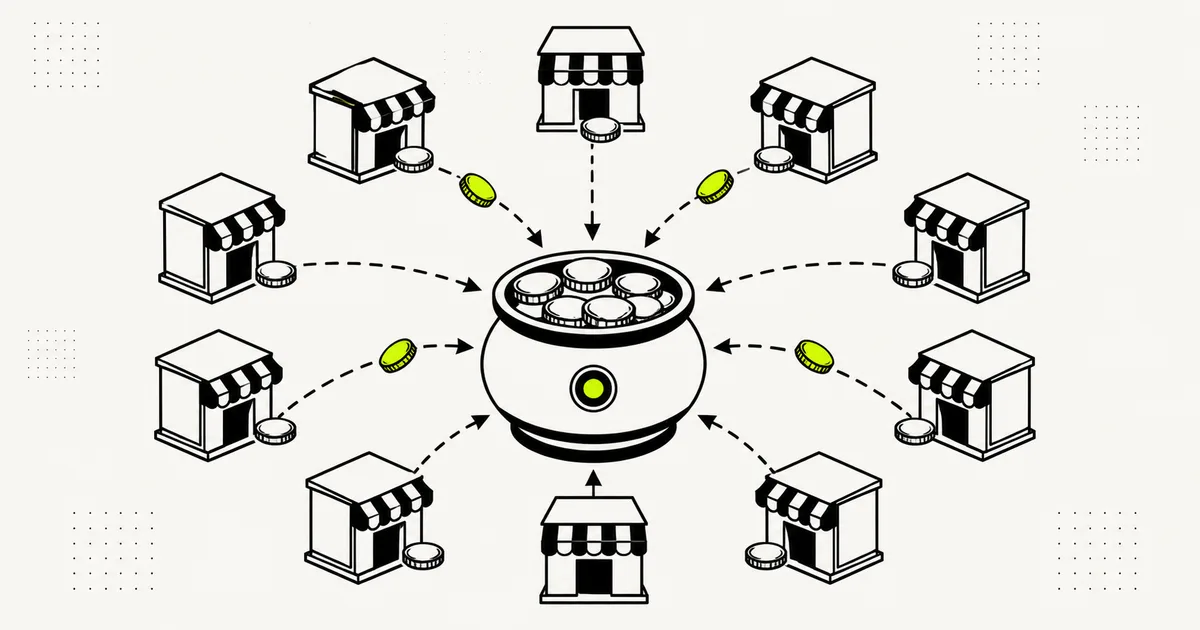
If you own a franchise, some percentage of your gross sales almost certainly flows into an advertising fund you do not individually control. This is a plain-English explainer: what co-op advertising funds are, who pays in, who decides how the money is spent, and which questions are worth asking before the next contribution leaves your account.
What is a co-op advertising fund?
A co-op advertising fund is money pooled by a group of franchisees, usually in the same region or media market, to buy advertising none of them could afford alone. Twenty locations sharing one TV buy, one direct mail drop, or one regional digital campaign get rates and reach that a single location cannot.
The word co-op gets used loosely in franchising, so it helps to separate three pots of money that often get lumped together:
| Fund | Who pays | Who decides | Typical scope |
|---|---|---|---|
| National brand fund | Every franchisee, a percentage of gross sales | The franchisor | National campaigns, brand assets |
| Regional co-op | Franchisees in one market, sometimes matched by corporate | A franchisee committee with corporate input | Regional TV, radio, mail, digital |
| Local requirement | The individual franchisee | The franchisee, inside brand rules | Their own trade area |
You will also hear the same money called an ad fund, a brand fund, or a marketing fund. Most systems run some version of all three rows. The friction lives almost entirely in the middle one, because that is the money franchisees contributed but do not individually control.
How much do franchisees pay in?
It varies by system and is spelled out in the franchise agreement. Contributions to a national brand fund commonly run one to two percent of gross sales. Regional co-ops are often structured as an additional percentage or a flat amount per location, and some franchisors match co-op dollars to encourage participation.
The honest answer to "how much" is to read your own agreement, because those ranges are common rather than universal. In the United States, advertising fund obligations are disclosed in the franchise disclosure document, so the numbers are knowable before anyone signs anything.
Who decides how the money is spent?
For a regional co-op, formally, a committee of franchisees in that market, operating under bylaws the franchisor provides, usually with an agency executing the media buys. In practice, the agency and the franchisor shape most decisions, because they hold the information: media rates, creative, performance reporting.
That information gap is the root of most co-op complaints. A franchisee voting on a campaign they cannot independently evaluate is approving on trust, and trust erodes fastest when results are ambiguous. We wrote separately about what that does to fund meetings, and how validating creative before the spend changes them.
What co-op money typically buys
The workhorse spends are unglamorous: regional broadcast and radio flights, direct mail drops timed to seasons, regional digital and social campaigns, and the production costs behind all of it. A well-run fund also pays for the boring connective tissue, like market research and performance reporting, though these are the first line items cut when the fund is under pressure.
What co-op money should not quietly become is a subsidy for creative that was never checked against the markets paying for it. A regional campaign built for the average of twelve markets can fit none of them exactly, and every contributing location pays the same share either way. Why the same ad lands differently from one market to the next is its own topic, but the budget implication belongs here: averaging is the most expensive habit a co-op fund has.
Questions every contributing franchisee should be able to ask
Five questions, none of them hostile, that any well-run fund can answer:
- What did the fund spend last quarter, by channel and by market?
- How was the creative validated before the buy, and what changed as a result?
- Which markets did the campaign work in, and which did it not?
- What share of spend went to media versus production versus fees?
- What happens to unspent money at the end of the year?
A fund that cannot answer the second and third questions has a process gap, not a personality problem. Those two answers are cheap to produce now: creative can be tested against the personas of each contributing market before the media commits, which turns the next fund meeting from a debate about taste into a review of evidence.
The short version
A co-op advertising fund is a good deal wrapped in a governance problem. Pooled money buys reach that individual locations cannot, and the same pooling removes the direct control that makes owners comfortable. The fix is not less pooling. It is more visibility: disclosed spending, per-market validation before the money commits, and results reported market by market.
If you want to see what per-market validation looks like on a real ad, you can run one free without an account. Related reading: proving co-op creative works before you spend it and franchise advertising examples that work.